All Examples

Interest · 31 examples

Biomimicry examples:
Architecture

31 examples where people turned a strategy from nature into architecture solutions.

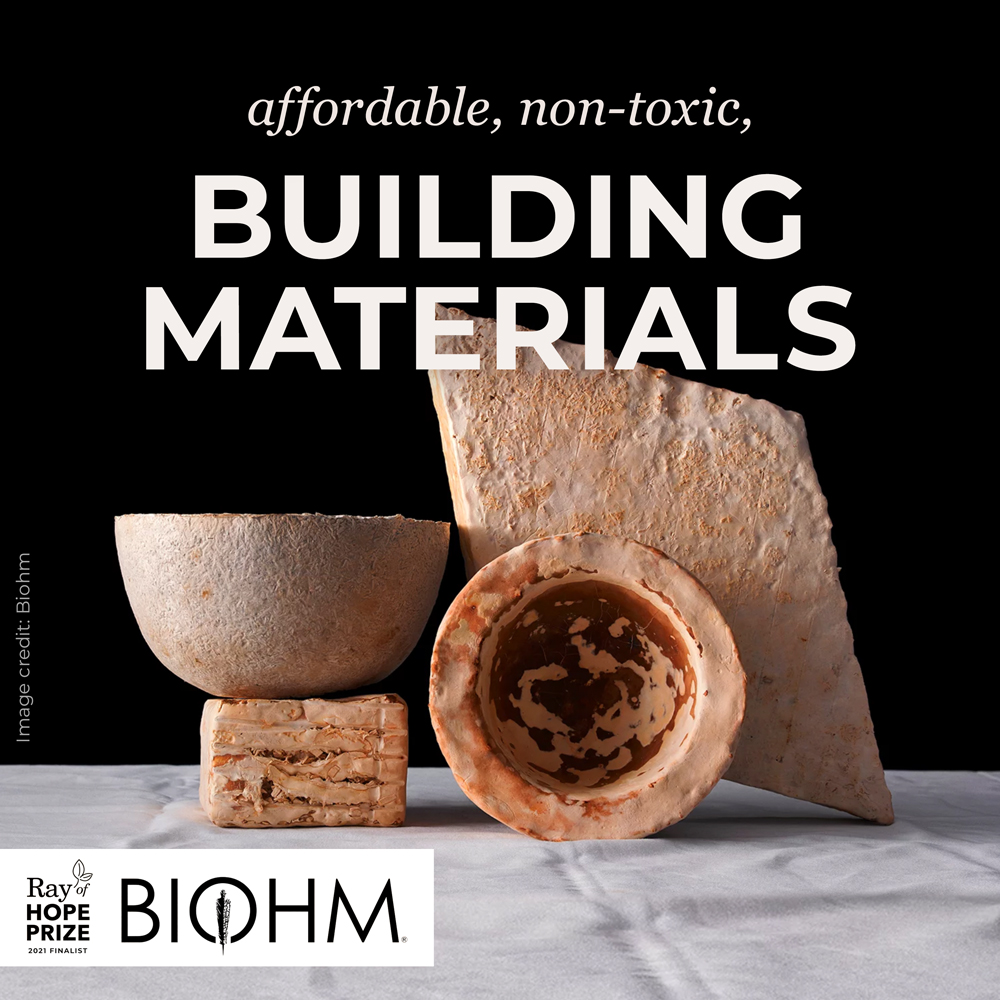
Biological inspiration for Mycelium-Based Building Materials
Human application for Mycelium-Based Building Materials
Architecture

Mycelium (fungal networks, various species)

Mycelium-Based Building Materials

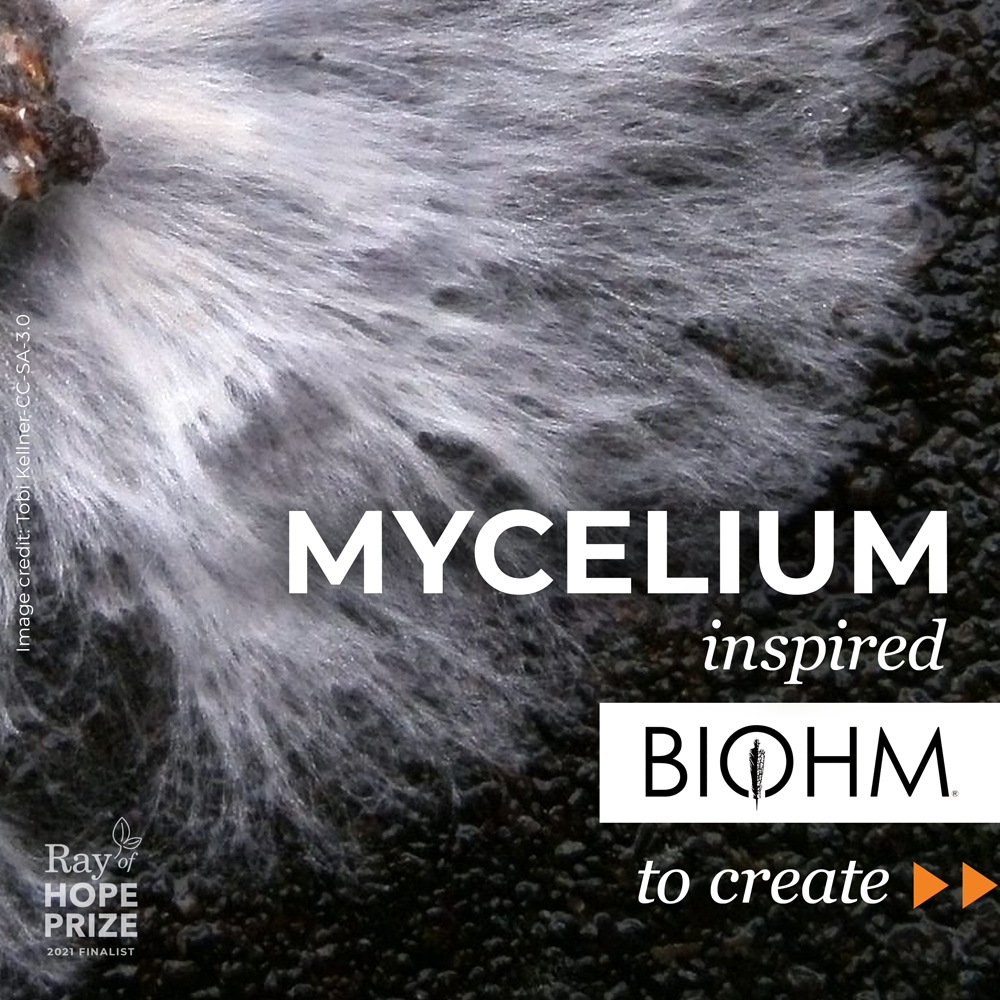
Biohm developed mycelium-based building materials that are affordable, non-toxic, fire-resistant, and fully biodegradable. These materials function as insulation, structural panels, and acoustic treatments in sustainable building design.

  • ✿Inspired by: Mycelium (fungal networks, various species)
  • ⚡︎Function: Structural support, insulation, acoustic absorption
  • ▣Company: Biohm
  • ◉Where: USA
See full biomimicry example
Biological inspiration for Eden Project Biomes: Soap Bubble Geometry
Human application for Eden Project Biomes: Soap Bubble Geometry
Architecture

Soap bubbles, carbon molecules, pollen grains, dragonfly wings, pressurised natural membranes

Eden Project Biomes: Soap Bubble Geometry

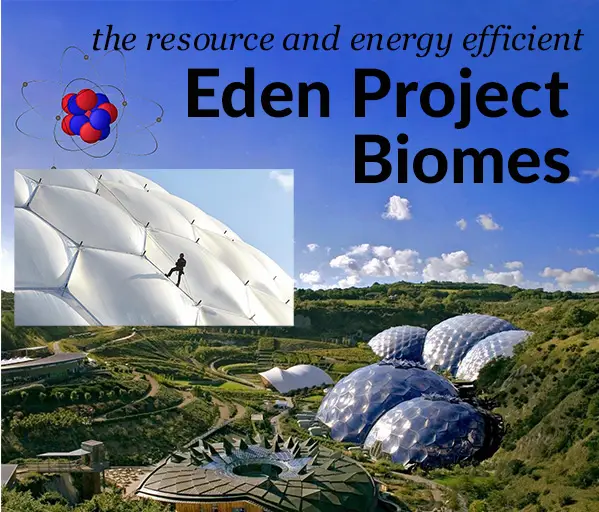
The Eden Project's iconic biome enclosures use soap bubble geometry reinforced with hexagons and pentagons, achieving structures lighter than the air they contain using ETFE polymer 1% the weight of glass.

  • ✿Inspired by: Soap bubbles, carbon molecules, pollen grains, dragonfly wings, pressurised natural membranes
  • ⚡︎Function: Large tropical and temperate climate zones must be enclosed, maintaining distinct environments whilst minimising construction cost and on...
  • ▣Company: Grimshaw with Arup
  • ◉Where: Cornwall, UK
See full biomimicry example
Biological inspiration for The Mobius Project: Zero-Waste Nutrient Cycle Greenhouse
Human application for The Mobius Project: Zero-Waste Nutrient Cycle Greenhouse
Architecture

Natural ecosystem nutrient cycling

The Mobius Project: Zero-Waste Nutrient Cycle Greenhouse

This zero-waste urban greenhouse concept mimics natural ecosystem nutrient cycling, where waste from one process becomes input for another, generating food, energy, and water treatment simultaneously.

  • ✿Inspired by: Natural ecosystem nutrient cycling
  • ⚡︎Function: Produce food, energy, and clean water in urban environments whilst eliminating waste and creating economic value.
  • ▣Company: Exploration Architecture (now Iguana Architects)
  • ◉Where: UK
See full biomimicry example
Biological inspiration for Tower of Light: Mollusc Shell-Lace Structure
Human application for Tower of Light: Mollusc Shell-Lace Structure
Architecture

Marine mollusc shells

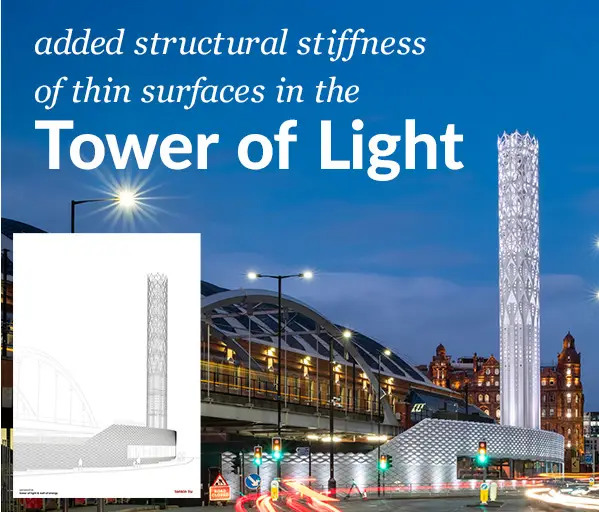
Tower of Light: Mollusc Shell-Lace Structure

This Manchester flue tower uses mollusc shell-inspired lace structure with thin steel sheets (6-8mm) and perforations to achieve remarkable lightness without sacrificing strength.

  • ✿Inspired by: Marine mollusc shells
  • ⚡︎Function: The tower must function as a flue (exhaust structure) while being lightweight, beautiful, and achieving net-zero environmental impact.
  • ▣Company: Tonkin Liu with Arup
  • ◉Where: Manchester, UK
See full biomimicry example
Biological inspiration for Eastgate Centre: Termite-Inspired Passive Cooling
Human application for Eastgate Centre: Termite-Inspired Passive Cooling
Architecture

African termite (Macrotermes michaelseni)

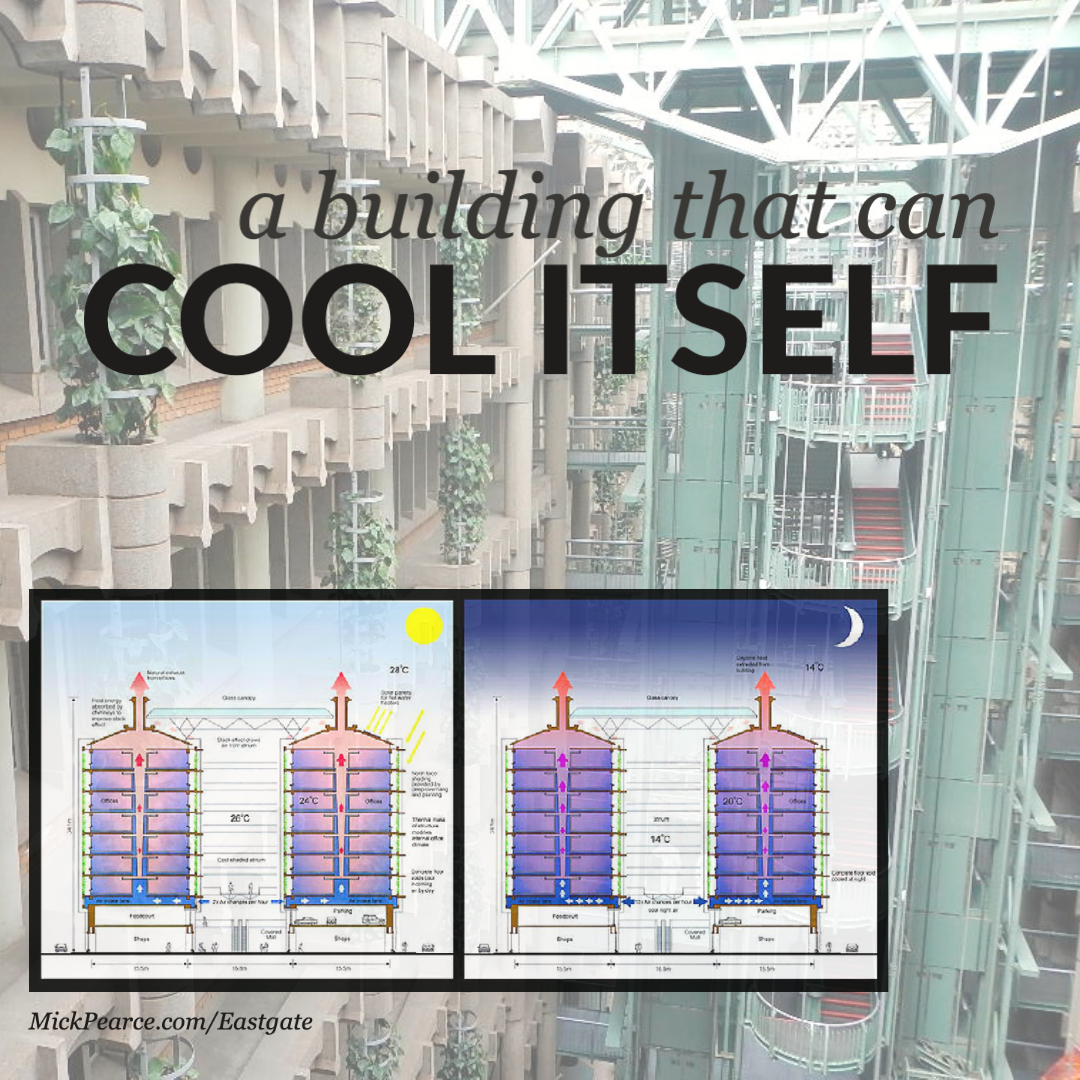
Eastgate Centre: Termite-Inspired Passive Cooling

The Eastgate Centre in Harare, Zimbabwe uses no conventional air conditioning, yet maintains a constant temperature year-round — modelled entirely on how African termites regulate heat inside their 3-metre mounds.

  • ✿Inspired by: African termite (Macrotermes michaelseni)
  • ⚡︎Function: Mimics termite mound ventilation for passive building cooling.
  • ▣Company: Architect Mick Pearce, Eastgate Centre
  • ◉Where: Harare, Zimbabwe
See full biomimicry example
Biological inspiration for Las Palmas Water Theatre: Beetle Fog Harvesting Desalination
Human application for Las Palmas Water Theatre: Beetle Fog Harvesting Desalination
Architecture

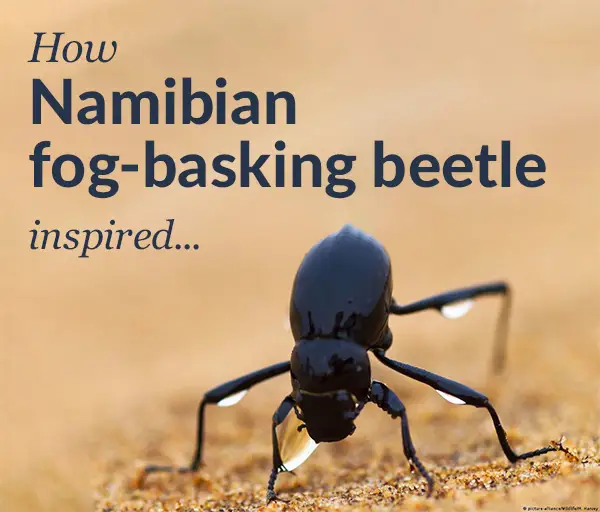
Namibian fog-basking beetle (Stenocara gracilipes)

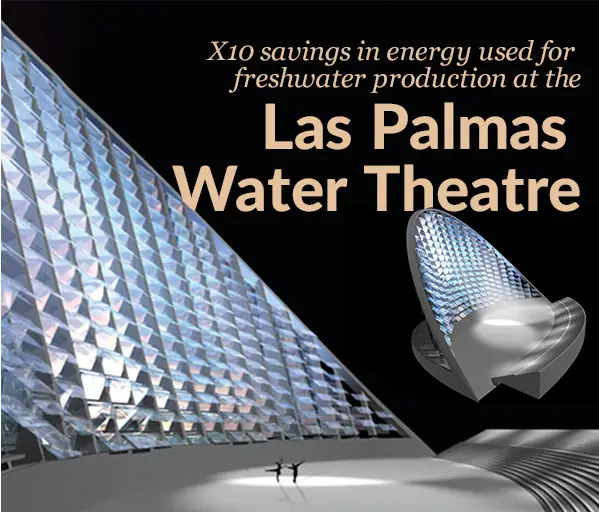
Las Palmas Water Theatre: Beetle Fog Harvesting Desalination

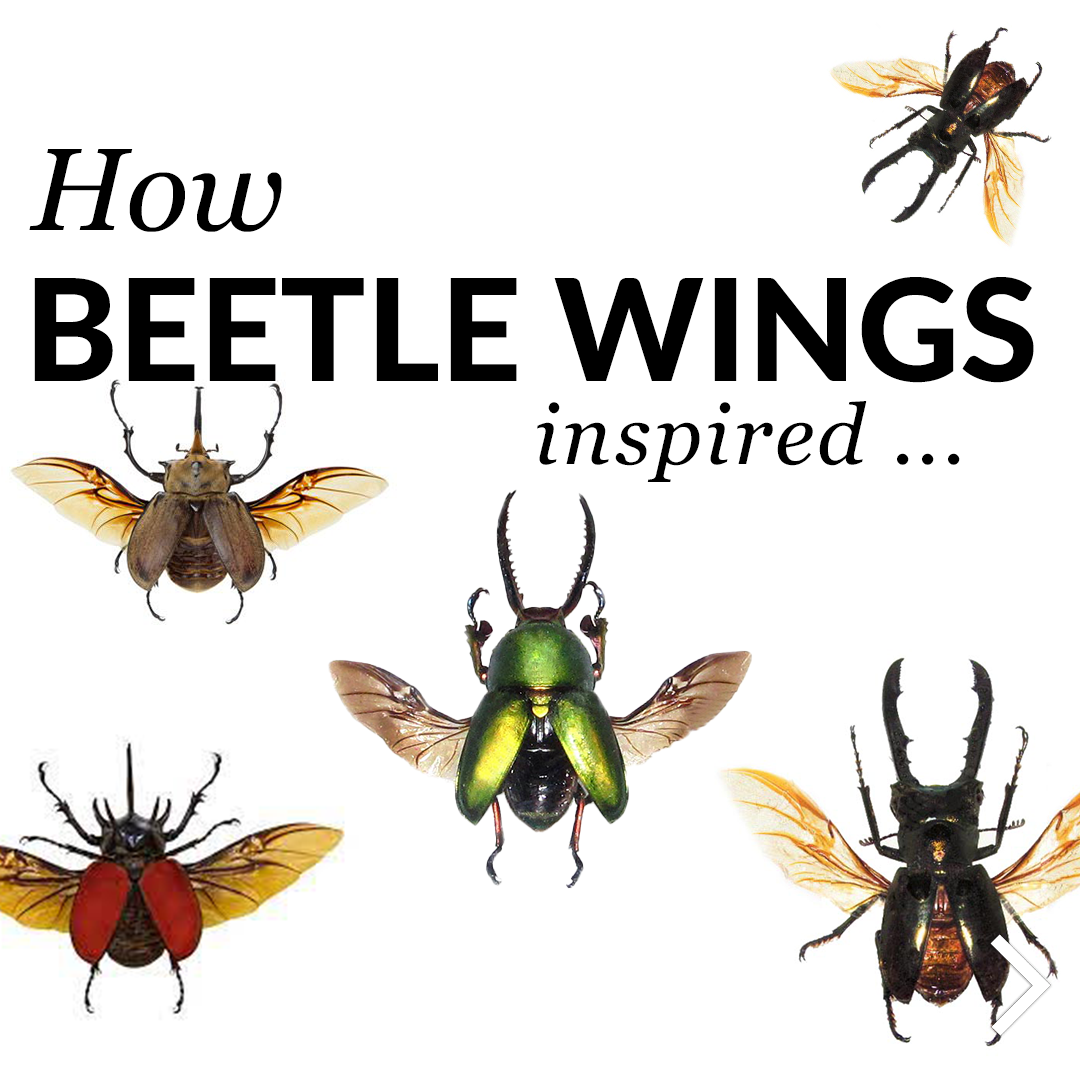
This water amphitheatre mimics the Namibian fog-basking beetle's water harvesting mechanism, using hydrophilic/hydrophobic surfaces to condense atmospheric moisture into freshwater with 10x energy savings for desalination.

  • ✿Inspired by: Namibian fog-basking beetle (Stenocara gracilipes)
  • ⚡︎Function: Provide freshwater to coastal communities whilst creating public cultural space, without energy-intensive mechanical desalination.
  • ▣Company: Grimshaw
  • ◉Where: Gran Canaria, Canary Islands
See full biomimicry example
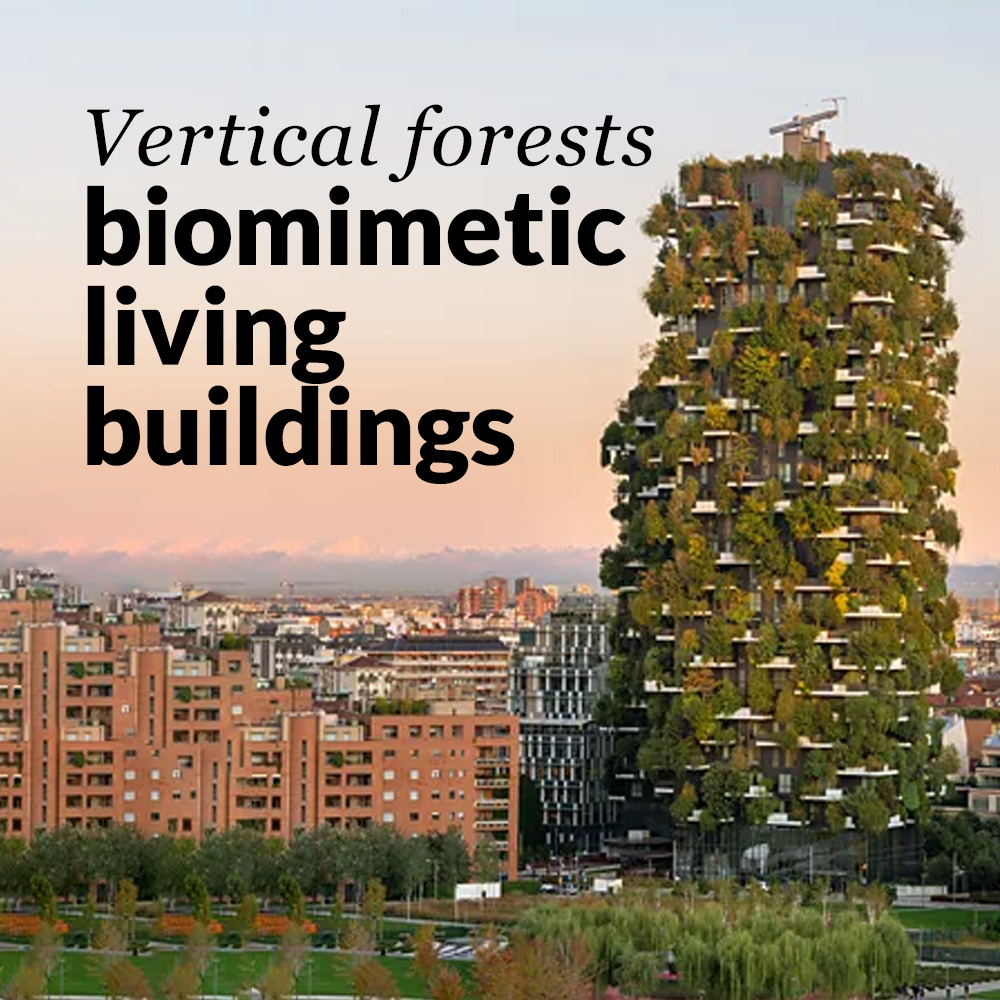
Biological inspiration for Biomimetic Buildings: Vertical Forests
Human application for Biomimetic Buildings: Vertical Forests
Architecture

Forests and tree ecosystems

Biomimetic Buildings: Vertical Forests

Vincent Callebaut Architectures designs biomimetic buildings that function like living ecosystems. Vertical forests integrate vegetation into building structure, mimicking forest ecology while providing insulation, air purification, and aesthetic benefits.

  • ✿Inspired by: Forests and tree ecosystems
  • ⚡︎Function: Building envelope functionality and ecosystem integration
  • ▣Company: Vincent Callebaut Architectures
  • ◉Where: Milan, Italy
See full biomimicry example
Architecture

Sensitive plants (Mimosa pudica), circulatory systems, solar-optimising leaf arrangements

Biomimetic Office Building: Self-Regulating Commercial Design

A 20,000 m² self-heated, self-cooled, and self-ventilated commercial building in Switzerland whose footprint was generated through genetic algorithm optimisation mimicking nature's solar collection strategies, with adaptive facades inspired by sensitive plants and decentralised heat distribution like a circulatory system.

  • ✿Inspired by: Sensitive plants (Mimosa pudica), circulatory systems, solar-optimising leaf arrangements
  • ⚡︎Function: Living organisms must regulate internal temperature, harvest energy, and distribute resources across their bodies without centralised mec...
  • ▣Company: Atelier 10 / Exploration Architecture (Michael Pawlyn)
  • ◉Where: Switzerland
See full biomimicry example
Architecture

Termite mounds (Macrotermes)

Federation Square: Termite-Inspired Thermal Labyrinth

A 38,000 m² art and media complex in Melbourne featuring the largest thermal labyrinth installed at the time of construction, inspired by termite mound ventilation to achieve passive cooling without mechanical air conditioning.

  • ✿Inspired by: Termite mounds (Macrotermes)
  • ⚡︎Function: Termite colonies must maintain stable internal temperatures for fungus cultivation despite extreme external temperature swings, without a...
  • ▣Company: Atelier 10 / LAB Architecture Studio / Bates Smart
  • ◉Where: Melbourne, Australia
See full biomimicry example
Biological inspiration for Living Building Challenge: Nature-Based Building Framework
Human application for Living Building Challenge: Nature-Based Building Framework
Architecture

Various organisms and natural systems (framework)

Living Building Challenge: Nature-Based Building Framework

Comprehensive building certification framework requiring buildings to function like living systems with positive environmental impact.

  • ✿Inspired by: Various organisms and natural systems (framework)
  • ⚡︎Function: Applies life's principles to building design and operation.
  • ▣Company: International Living Future Institute (ILFI)
  • ◉Where: Seattle, USA
See full biomimicry example
Biological inspiration for Mountain Data Centre: Biological Branching Cooling
Human application for Mountain Data Centre: Biological Branching Cooling
Architecture

Branching biological systems (Murray's Law)

Mountain Data Centre: Biological Branching Cooling

This data centre eliminates energy-intensive cooling by locating in a mountain tunnel and using Murray's Law of biological branching to optimise duct networks for thermal distribution.

  • ✿Inspired by: Branching biological systems (Murray's Law)
  • ⚡︎Function: House energy-intensive data servers while minimising operational energy consumption through cooling systems.
  • ▣Company: Exploration Architecture
  • ◉Where: Norway
See full biomimicry example
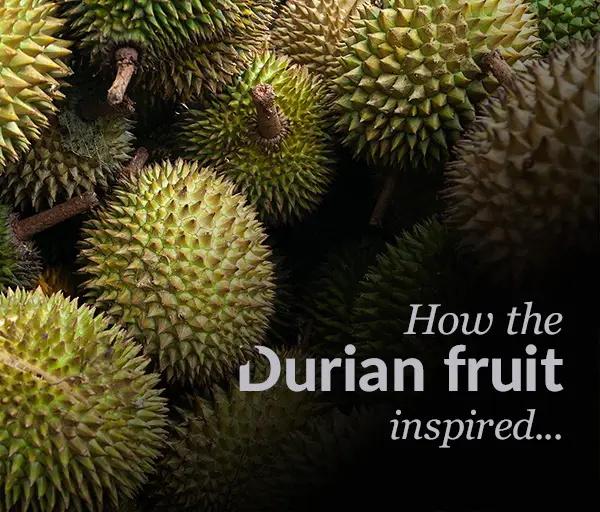
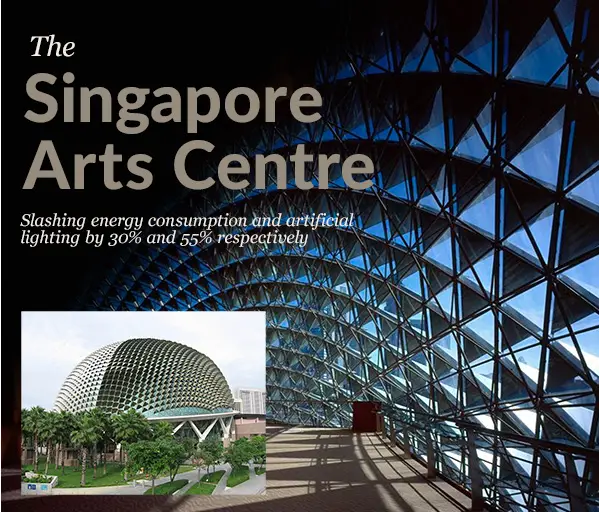
Biological inspiration for Singapore Arts Centre: Durian Fruit Kinetic Facade
Human application for Singapore Arts Centre: Durian Fruit Kinetic Facade
Architecture

Durian fruit (Durio zibethinus) thorny casing

Singapore Arts Centre: Durian Fruit Kinetic Facade

Singapore Arts Centre's kinetic facade mimics durian fruit's spiky protective envelope, synchronising with sun movement to control tropical heat while maintaining natural lighting and reducing energy use by 30%.

  • ✿Inspired by: Durian fruit (Durio zibethinus) thorny casing
  • ⚡︎Function: The building must manage intense tropical sun and heat, maintain comfortable interior conditions, provide generous daylighting for arts a...
  • ▣Company: Michael Wilford & Partners with Atelier One and Atelier Ten
  • ◉Where: Singapore
See full biomimicry example
Biological inspiration for Village of Lavasa: Forest Ecosystem Urban Design
Human application for Village of Lavasa: Forest Ecosystem Urban Design
Architecture

Deciduous forest ecosystem

Village of Lavasa: Forest Ecosystem Urban Design

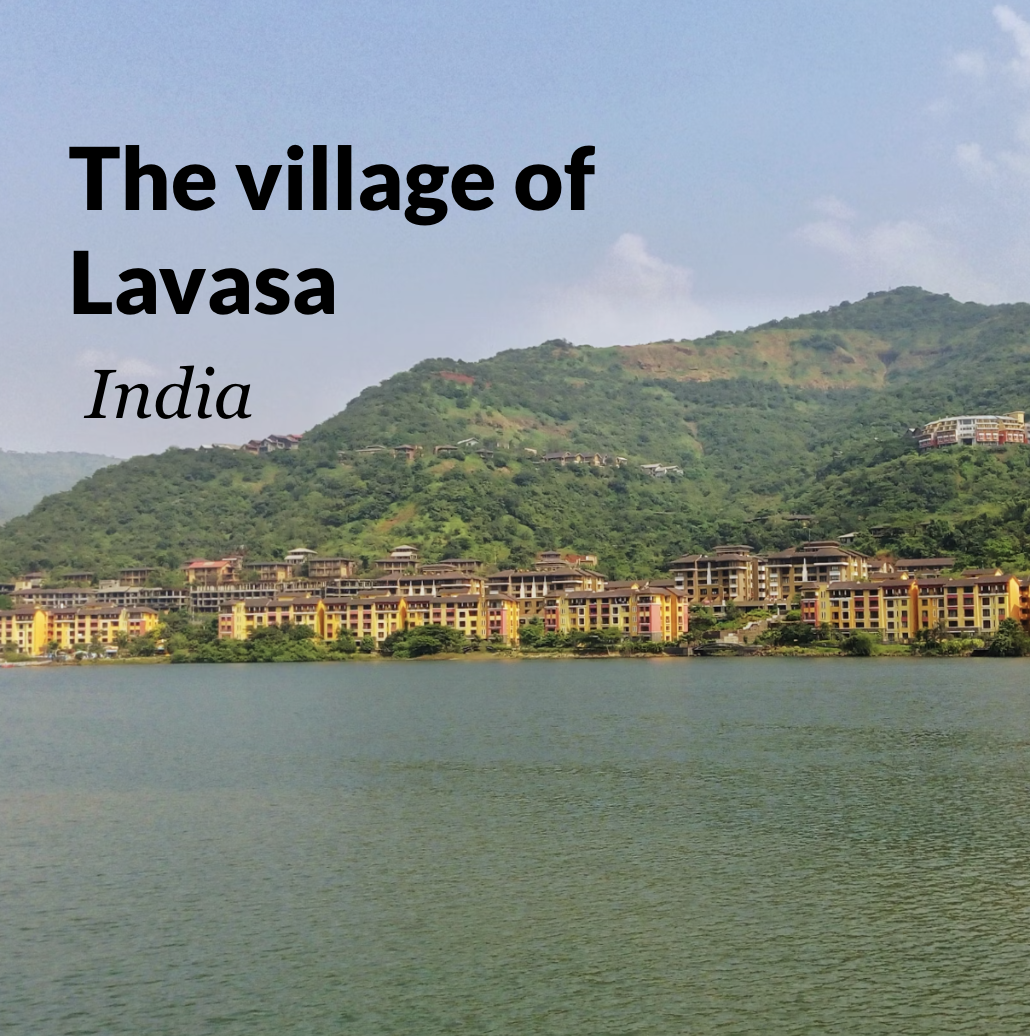
This Indian village replicates six ecosystem services from local deciduous forest, with roofs that release monsoonal water as vapour, permeable pavements, tree-root-inspired foundations, and anthills-modelled rainfall management.

  • ✿Inspired by: Deciduous forest ecosystem
  • ⚡︎Function: Develop a village that provides human housing whilst maintaining or restoring the ecological function of the landscape it occupies.
  • ▣Company: HOK with Biomimicry 3.8
  • ◉Where: India
See full biomimicry example
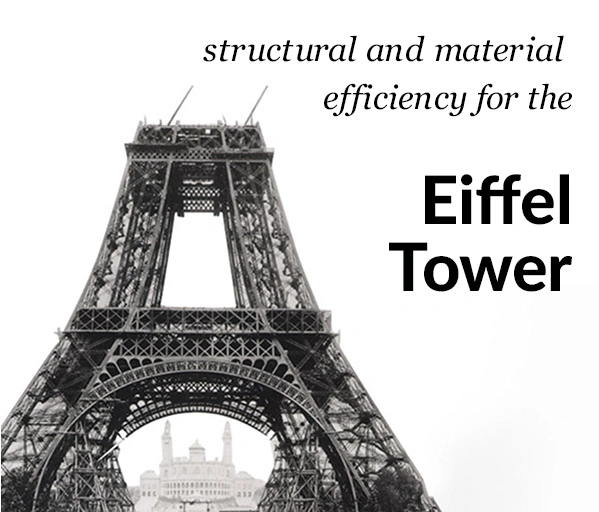
Biological inspiration for Eiffel Tower: Femur-Inspired Hierarchical Structure
Human application for Eiffel Tower: Femur-Inspired Hierarchical Structure
Architecture

Human femur bone trabeculae

Eiffel Tower: Femur-Inspired Hierarchical Structure

The Eiffel Tower's curved structure and hierarchical truss system mimic the efficient load-bearing design of human femur bone, with supporting elements aligned along lines of force like trabeculae.

  • ✿Inspired by: Human femur bone trabeculae
  • ⚡︎Function: The tower must support its own massive weight and resist wind-induced bending stresses while minimizing material and cost.
  • ▣Company: Gustave Eiffel
  • ◉Where: Paris, France
See full biomimicry example
Architecture

Physarum polycephalum (slime mould)

George Brown College: Slime Mould Campus Circulation

A campus master plan for George Brown College in Toronto that uses slime mould algorithms to optimise transportation routes between multiple urban campus patches, revealing resilient redundancies in the network.

  • ✿Inspired by: Physarum polycephalum (slime mould)
  • ⚡︎Function: Slime moulds must efficiently transport nutrients between distributed food sources while maintaining network integrity if any pathway is...
  • ▣Company: B+H Architects / Raphael Kay (Harvard)
  • ◉Where: Toronto, Canada
See full biomimicry example
Architecture

Nature-inspired design combined with dragon dancing tradition

Jinhua Yanweizhou Park

A landscape and park design by Turenscape that integrates natural ecological principles with cultural traditions like dragon dancing for environmental restoration.

  • ✿Inspired by: Nature-inspired design combined with dragon dancing tradition
  • ⚡︎Function: Restore degraded wetlands while creating culturally meaningful community space
  • ▣Company: Turenscape
  • ◉Where: Jinhua, China
See full biomimicry example
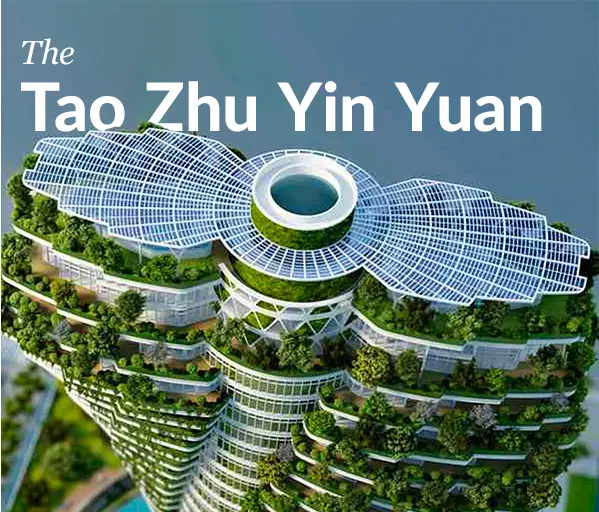
Biological inspiration for Tao Zhu Yin Yuan: DNA Double-Helix Carbon-Absorbing Tower
Human application for Tao Zhu Yin Yuan: DNA Double-Helix Carbon-Absorbing Tower
Architecture

Human DNA structure and skiing mechanics

Tao Zhu Yin Yuan: DNA Double-Helix Carbon-Absorbing Tower

This Taipei tower's DNA double-helix form provides panoramic views, privacy, and structural resilience while absorbing 130 tons of CO2 annually through integrated green systems.

  • ✿Inspired by: Human DNA structure and skiing mechanics
  • ⚡︎Function: The tower must house residents comfortably while sequestering carbon, providing both privacy and panoramic views, and surviving seismic e...
  • ▣Company: Vincent Callebaut Architectures
  • ◉Where: Taipei, Taiwan
See full biomimicry example
Architecture

Forest patch dynamics and ant communication networks

CABN Vision Plan: Forest Patch Dynamics Community Design

A 64-hectare carbon-positive community in rural Ontario designed by emulating forest patch dynamics and ant communication strategies to create resilient, pedestrian-focused clusters of prefabricated net-positive homes.

  • ✿Inspired by: Forest patch dynamics and ant communication networks
  • ⚡︎Function: Forest ecosystems must maintain productivity and resilience across large areas despite variable conditions, disturbances, and resource av...
  • ▣Company: B+H Architects / CABN
  • ◉Where: Ontario, Canada
See full biomimicry example
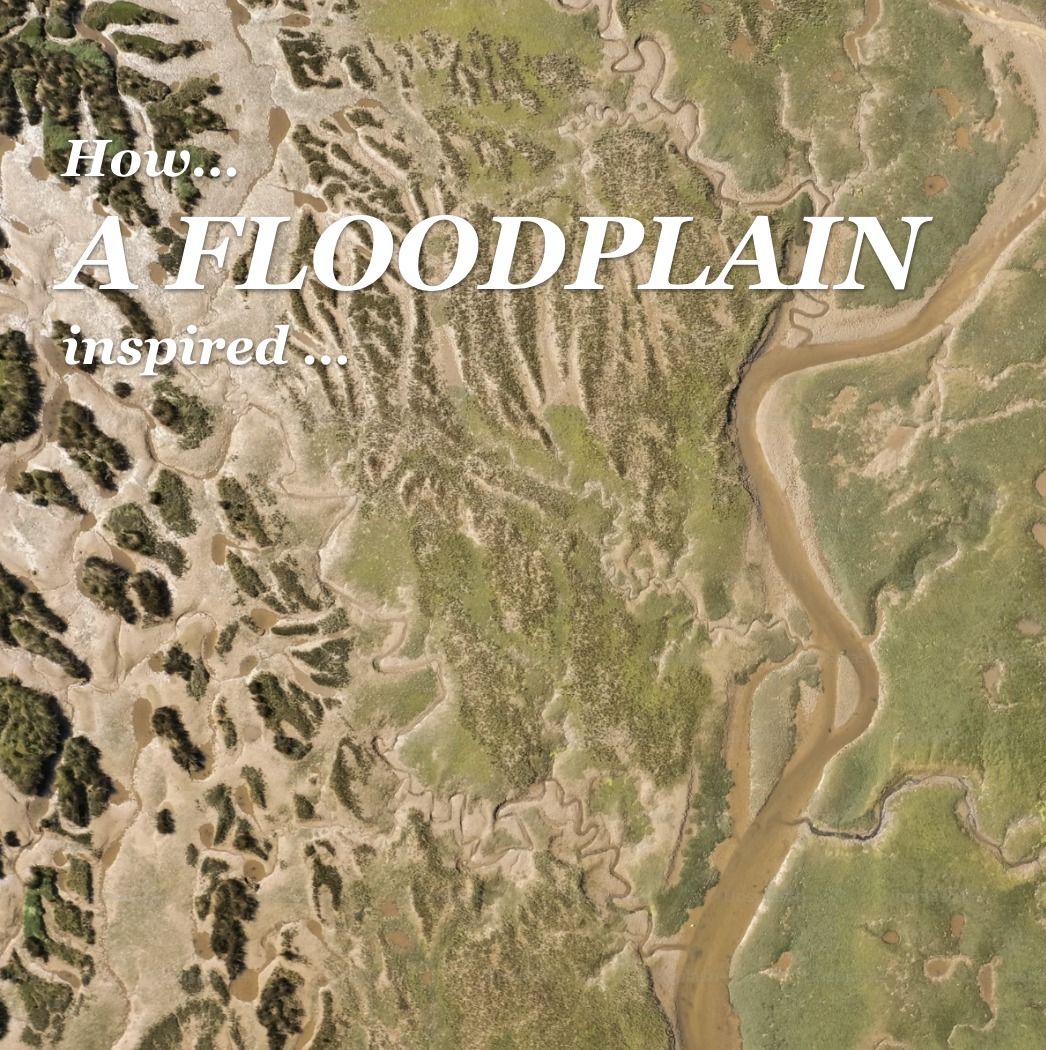
Biological inspiration for Hamlet Waterfront: Floodplain-Integrated Residential Design
Human application for Hamlet Waterfront: Floodplain-Integrated Residential Design
Architecture

River delta and wetland ecosystems

Hamlet Waterfront: Floodplain-Integrated Residential Design

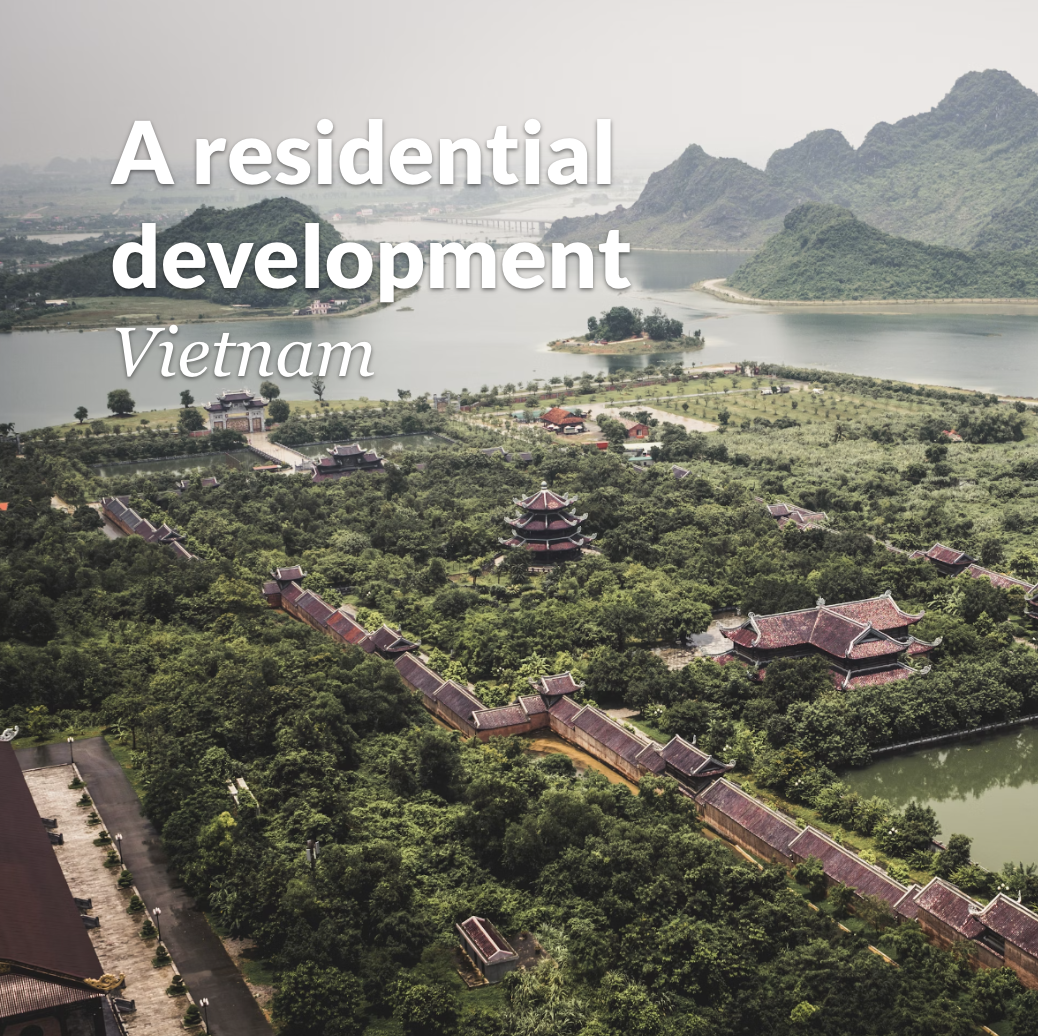
This Vietnamese waterfront development integrates rather than eradicates natural wetlands and river delta systems, allowing development and ecosystem services to coexist through locally-attuned system design.

  • ✿Inspired by: River delta and wetland ecosystems
  • ⚡︎Function: Provide residential development on floodplain while maintaining or restoring ecological function and achieving flood resilience.
  • ▣Company: B+H Architecture & Biomimicry Frontiers
  • ◉Where: Vietnam
See full biomimicry example
Architecture

Bison grazing patterns and prairie wetland hydrology

Metis Crossing: Biomimetic Infrastructure Master Plan

A 600-hectare infrastructure master plan for an Indigenous Metis cultural centre in Alberta, Canada, using biomimetic strategies including bison-based regeneration and wetland restoration.

  • ✿Inspired by: Bison grazing patterns and prairie wetland hydrology
  • ⚡︎Function: Prairie ecosystems maintain productivity and resilience through the interaction of large grazing animals, fire, and hydrology, cycling nu...
  • ▣Company: B+H Architects
  • ◉Where: Alberta, Canada
See full biomimicry example
Architecture

Ephemeral stream systems and forest finger ecology

New Lowell Living Village: Letting the Land Dictate Design

A 200-hectare mixed-use master plan in Ontario that restores dried ephemeral streams and integrates forest fingers into the urban fabric, achieving measurably higher ecological performance than both pre-design conditions and traditional development.

  • ✿Inspired by: Ephemeral stream systems and forest finger ecology
  • ⚡︎Function: Watershed ecosystems distribute water from ridgeline to wetland through branching networks of ephemeral and perennial streams, filtering...
  • ▣Company: B+H Architects
  • ◉Where: Ontario, Canada
See full biomimicry example
Architecture

Heterogeneous biological membranes and circulatory systems

Project Jewel: Biomimetic Airport Climate Design

A 121,000 m² airport and commercial complex in Singapore that uses heterogeneous glazing patterns and embedded chilled water pipe systems inspired by biological membranes and circulatory systems to strategically condition a vast indoor garden without massive energy consumption.

  • ✿Inspired by: Heterogeneous biological membranes and circulatory systems
  • ⚡︎Function: Living organisms must regulate internal conditions across large bodies with different zones requiring different conditions—tropical canop...
  • ▣Company: Atelier 10 / Safdie Architects
  • ◉Where: Singapore
See full biomimicry example
Architecture

Prairie grassland ecosystems and earth-sheltered geology

Roosevelt Presidential Library: Regenerative Living Building

A 109,000 ft² presidential library achieving Living Building Standard certification through earth-sheltered design, local grazing agriculture for carbon sinking, and energy generation exceeding 105% of building needs.

  • ✿Inspired by: Prairie grassland ecosystems and earth-sheltered geology
  • ⚡︎Function: Prairie ecosystems sustain themselves through the interaction of deep-rooted grasses, soil microbiomes, and large grazers, cycling carbon...
  • ▣Company: Atelier 10
  • ◉Where: North Dakota, USA
See full biomimicry example
Architecture

Island ecosystems and Ahupua'a land management

Kaua'i Economic Resilience Centre

A biomimetic commercial building on Kaua'i that uses the Living Story methodology and indigenous Hawaiian knowledge to address socio-ecological and economic challenges on the island.

  • ✿Inspired by: Island ecosystems and Ahupua'a land management
  • ⚡︎Function: Island ecosystems must sustain all life functions within strict resource boundaries, cycling nutrients, water, and energy without externa...
  • ▣Company: B+H Architects
  • ◉Where: Kaua'i, Hawai'i, USA
See full biomimicry example

For R&D and product teams

Find the problems worth solving in your own products