Architecture
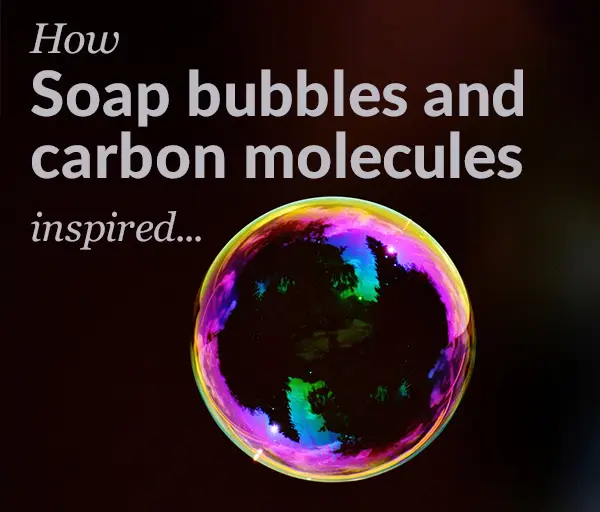
Soap bubbles, carbon molecules, pollen grains, dragonfly wings, pressurised natural membranes, the natural model for Eden Project Biomes: Soap Bubble Geometry
Eden Project Biomes: Soap Bubble Geometry: the human application

Inspired by: Soap bubbles, carbon molecules, pollen grains, dragonfly wings, pressurised natural membranes

Eden Project Biomes: Soap Bubble Geometry

Grimshaw with Arup

1%

ETFE vs. glass weight

relative to conventional glazing

~66%

Cost reduction

vs. typical glasshouse

Minimal

Steel framework

pneumatic self-support

The Problem

Large climate-controlled enclosures (greenhouses, biomes, conservatories) are expensive to construct and maintain due to heavy glass and steel frameworks. Energy consumption is high. Traditional materials are brittle and require extensive support structure.

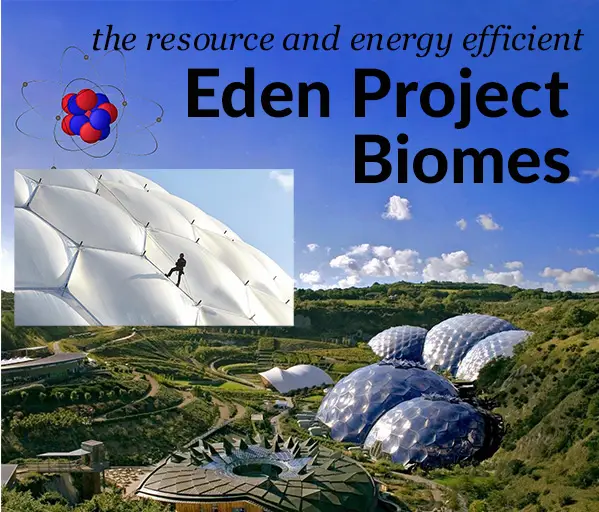
The Eden Project's iconic biome enclosures use soap bubble geometry reinforced with hexagons and pentagons, achieving structures lighter than the air they contain using ETFE polymer 1% the weight of glass.

The Eden Project in Cornwall represents one of the most iconic biomimetic structures ever built, a collaboration between Grimshaw architects and Arup engineers. The distinctive bulbous biomes are inspired by soap bubble geometry—the elegant mathematical principle that governs how bubbles minimise surface area while enclosing maximum volume. The enclosure design reinforces this natural form with hexagonal and pentagonal packing patterns that distribute structural stress evenly across the entire surface, creating inherent redundancy and robustness.

What makes the Eden Project revolutionary is its material choice: ETFE polymer film rather than traditional glass. This single decision cascades through the entire structural logic. ETFE is 7 times larger in scale than glass panes yet weighs only 1% as much, creating an enclosure that is literally lighter than the air it contains. Massive reduction in supporting steel structure follows naturally from this material choice—where a conventional glass greenhouse would require tonnes of steel framework, the Eden Project's pneumatic ETFE cushions create their own structural envelope with minimal support. The resource efficiency gain is staggering: the project achieved construction at approximately one-third the cost of a typical glasshouse of equivalent volume, whilst providing superior functionality, durability, and environmental performance.

The bubbles transmit and diffuse sunlight in ways that enhance plant growth and visitor experience simultaneously. Enhanced sunlight admittance combined with superior thermal properties enables the biomes to maintain distinct climate zones (tropical, warm temperate, and Mediterranean) efficiently. The Eden Project won the accolade of Best UK Leisure Attraction, but its significance extends far beyond entertainment—it demonstrated that biomimetic design could achieve resource efficiency, cost savings, and architectural beauty simultaneously, inspiring a generation of biomimetic architecture worldwide.
Biomimicry Breakdown

The Biomimicry Analysis

How Soap bubbles, carbon molecules, pollen grains, dragonfly wings, pressurised natural membranes translates into Eden Project Biomes: Soap Bubble Geometry

Term
Applied to Eden Project Biomes: Soap Bubble Geometry
Function
Large tropical and temperate climate zones must be enclosed, maintaining distinct environments whilst minimising construction cost and ongoing energy consumption.
Mechanism
Soap bubbles achieve minimal surface area through mathematically optimal curvature. Hexagonal packing (as in honeycomb, carbon molecules, pollen grains) distributes pressure evenly across surfaces.
Design Principle
Use surface-minimising geometry and pneumatic pressure distribution instead of heavy rigid frameworks. Let material choice (ultra-lightweight ETFE) drive structural logic rather than forcing heavy materials to work conventionally.
Resulting Design
Enclosures lighter than the air they contain, constructed at 1/3 typical greenhouse cost, with superior light transmission and thermal performance. Proof that biomimetic design enables simultaneous gains in cost, performance, and environmental impact.

Find your own nature-inspired opportunities

Inspired by Eden Project Biomes: Soap Bubble Geometry? The Biomimicry Opportunity Map scans your company website and suggests challenges worth solving the way nature would.

Get started →

Apply This

Design Application Prompts

There's a natural world to explore

Learn to find strategies like this yourself