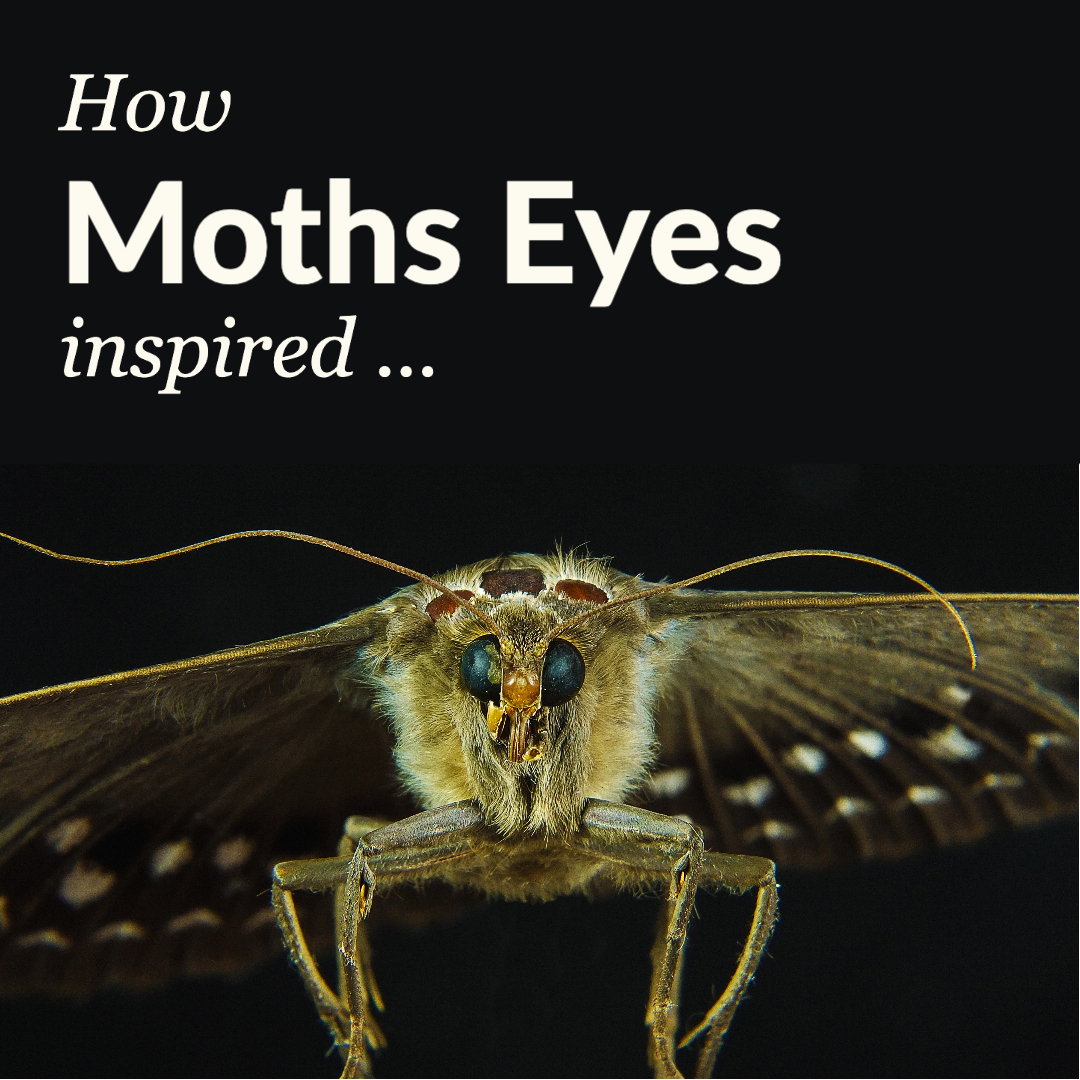
Moths' eyes are covered in an array of tiny bumps that eliminate virtually all reflection, allowing maximum light to enter in darkness. This "moth-eye" anti-reflection structure is now used in high-efficiency solar cells, increasing energy capture by up to 40%, and in anti-glare screens for every device you own.
Conventional glass reflects about 4% of incident light from each surface. For a solar panel with a glass cover, this means 8% of potential sunlight is immediately lost to reflection — before it even reaches the photovoltaic cells. Anti-reflection coatings improve this, but they are angle-dependent and add cost.
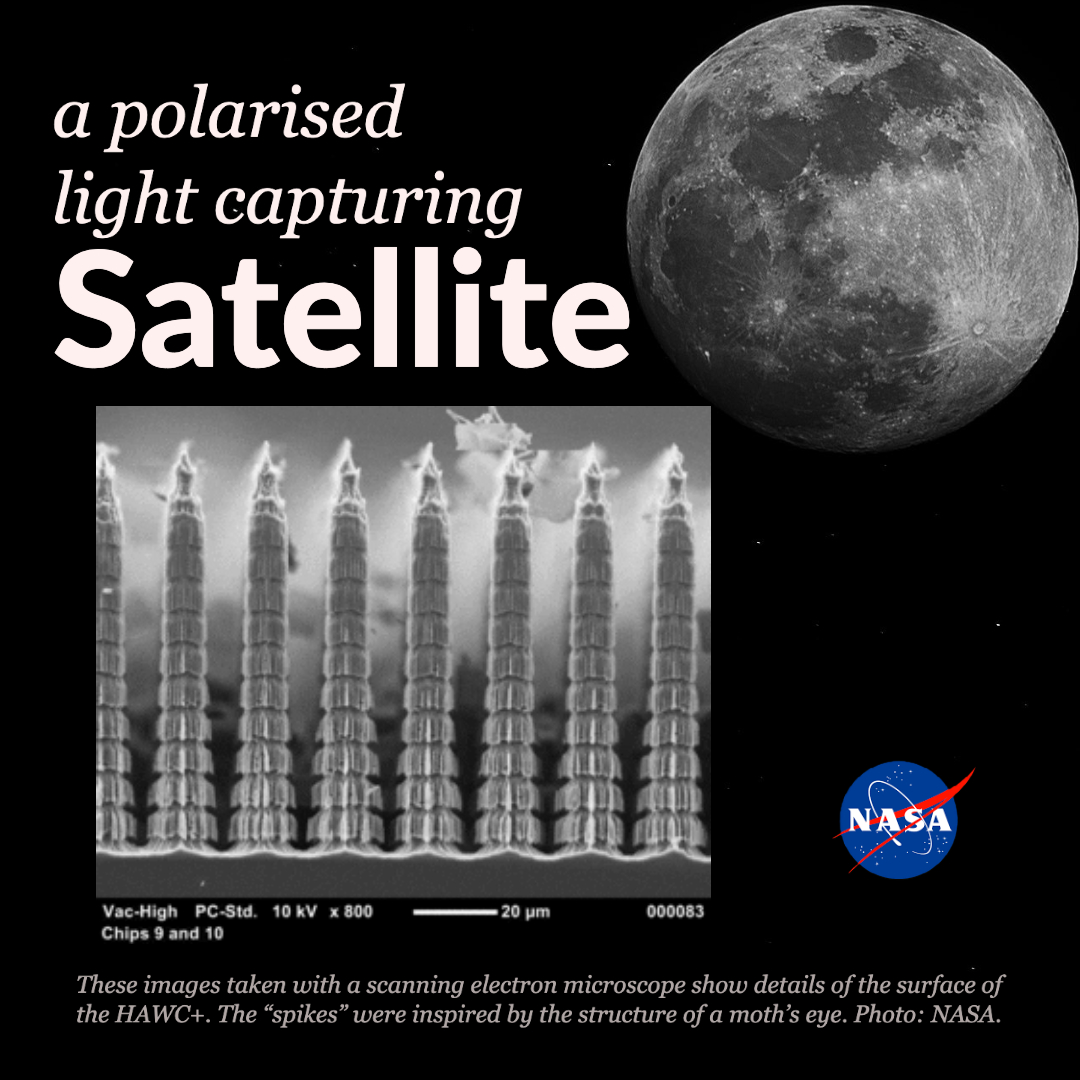
Moths' eyes must capture every available photon in low-light conditions without creating a reflective glint that would reveal them to predators. Their eyes are covered in an array of nano-scale bumps about 200 nm high, spaced at about 250 nm — smaller than the wavelength of visible light. This creates a gradient index of refraction that transitions air to lens material over multiple wavelengths, effectively eliminating reflection across all wavelengths and all angles of incidence.
Researchers at Fraunhofer Institute replicated this structure on silicon using nanoimprint lithography. Moth-eye textured silicon solar cells absorb up to 40% more light than equivalent smooth cells. The same surface can be applied to glass, reducing reflections to below 0.1%.
Commercial applications include anti-reflection treatment for solar panels (standard on high-efficiency panels), anti-glare screens for smartphones and televisions (your phone screen likely uses a derived version of this), camera lenses, and architectural glass that remains visually transparent while greatly reducing glare.