Product Design
Algal cell walls and biopolymers, the natural model for Munjoi - Algae-Based Biodegradable Footwear
Munjoi - Algae-Based Biodegradable Footwear: the human application

Inspired by: Algal cell walls and biopolymers

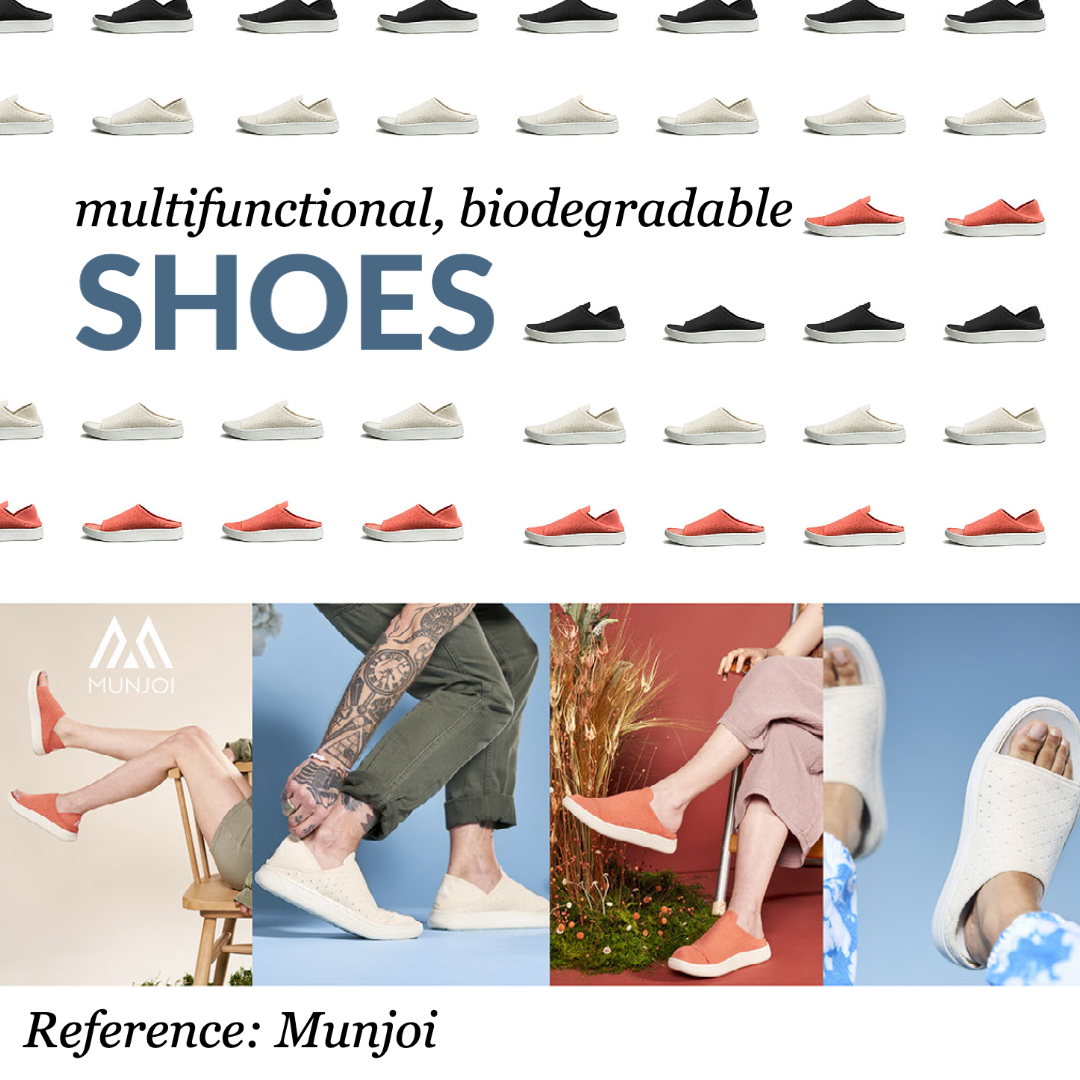
Munjoi - Algae-Based Biodegradable Footwear

Munjoi

0

persistent residues after composting

full biodegradability vs. conventional foams

12+

months wear durability

equivalent to conventional shoes

~2

kg CO2 sequestered per shoe during algae cultivation

carbon-negative versus petroleum-based alternatives

The Problem

Footwear industry produces ~3 billion pairs annually, 80% using petroleum-based foams (EVA, polyurethane) that persist for 40+ years in landfills. Conventional shoes accumulate in waste streams, degrading into microplastics. Biodegradable alternatives are needed.

Algae's structural biopolymers inspire foam materials for fully biodegradable, multifunctional footwear, replacing petroleum-based polymers.

Algae synthesise strong, lightweight cell walls from polysaccharides (cellulose, alginates, agar) that provide structural support whilst remaining fully compatible with microbial decomposition—a feat petroleum-based foams cannot match. When algae die, these polymers are rapidly consumed by soil microorganisms, cycling back into ecosystem productivity. Munjoi recognised that algal polysaccharides could be extracted, processed, and formed into foam materials providing cushioning, insulation, and water-resistance equivalent to petroleum-based EVA and polyurethane foams, yet fully biodegradable. The company cultivates algae (specifically fast-growing Chlorella and Spirulina), extracts polysaccharide fractions, and converts them into closed-cell foam through fermentation and controlled gelatinisation. Munjoi shoes feature algae-foam soles, linings, and structural elements, combined with organic cotton uppers. Field testing shows comfort and durability matching conventional shoes through 12+ months of wear, at which point the entire shoe is compostable. By replacing petroleum with photosynthetic algae, Munjoi achieves a truly circular footwear system: CO2 capture during algae growth, end-of-life compostability, and zero synthetic residues.
Biomimicry Breakdown

The Biomimicry Analysis

How Algal cell walls and biopolymers translates into Munjoi - Algae-Based Biodegradable Footwear

Term
Applied to Munjoi - Algae-Based Biodegradable Footwear
Function
Algae must create strong, water-resistant structures despite being composed entirely of water and soft biopolymers. They overcome this through polysaccharide cross-linking and cell-wall architecture that provides mechanical support comparable to engineered foams.
Mechanism
Algal cell walls comprise cellulose (structural scaffold), alginates, and xanthans (cross-linking). These polysaccharides form hydrogen-bonded networks that provide rigidity and water resistance. When algae decay, cellulase and other enzymes rapidly degrade polysaccharides, releasing them back into nutrient cycles.
Design Principle
Use biopolymers (cellulose, alginates, chitosan) as foam matrix materials instead of petroleum-derived polymers. Design structures where cross-linking is reversible or enzymatically degradable, enabling controlled biodegradation. Prioritise photosynthetic feedstocks to achieve carbon-negative production.
Resulting Design
Algae-foam soles provide cushioning, water-resistance, and durability matching petroleum-based foams, whilst remaining completely compostable. Shoes can be returned at end-of-life, composted, and the resulting biomass used as feedstock for next-generation production, creating a truly circular system.

Find your own nature-inspired opportunities

Inspired by Munjoi - Algae-Based Biodegradable Footwear? The Biomimicry Opportunity Map scans your company website and suggests challenges worth solving the way nature would.

Get started →

Apply This

Design Application Prompts

There's a natural world to explore

Learn to find strategies like this yourself