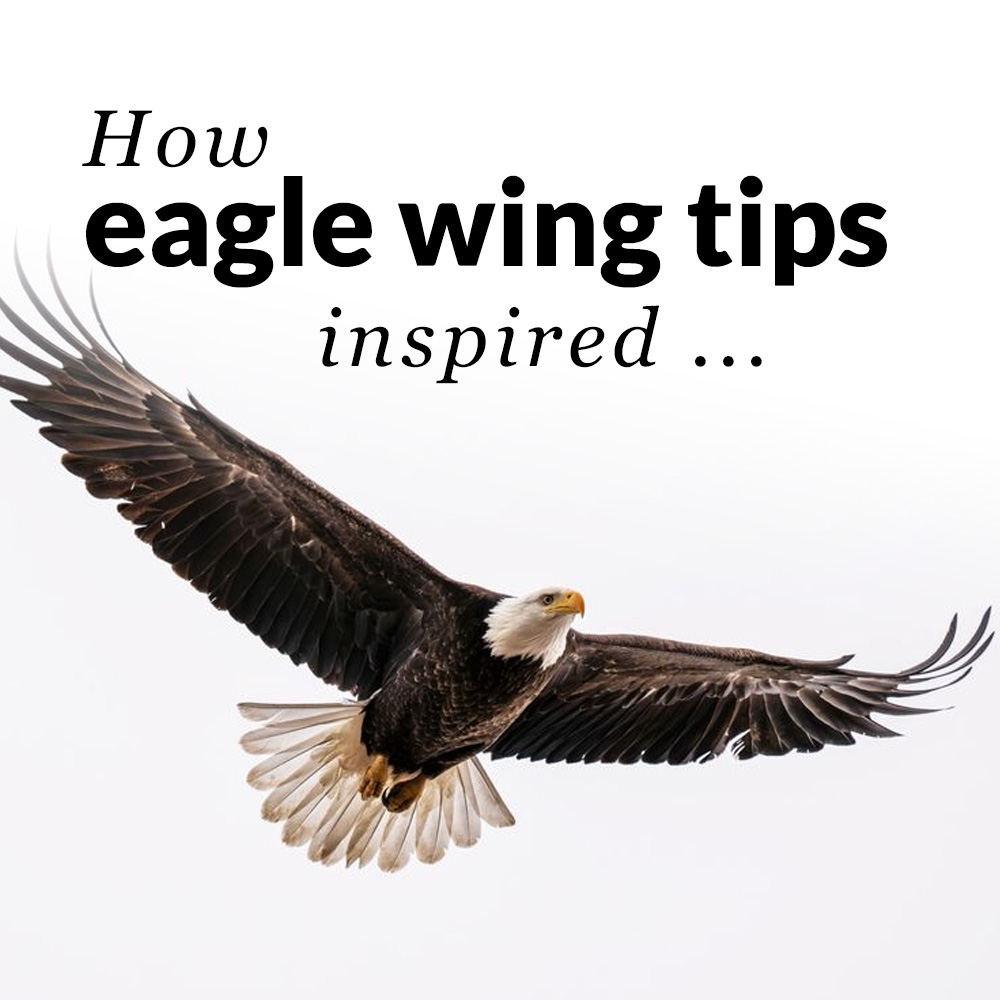
Large soaring birds like eagles and vultures spread their primary feathers into finger-like tips to reduce induced drag during soaring. Aircraft designers have mimicked this with winglets that reduce drag by 5–7%, saving airlines billions of litres of fuel per year.
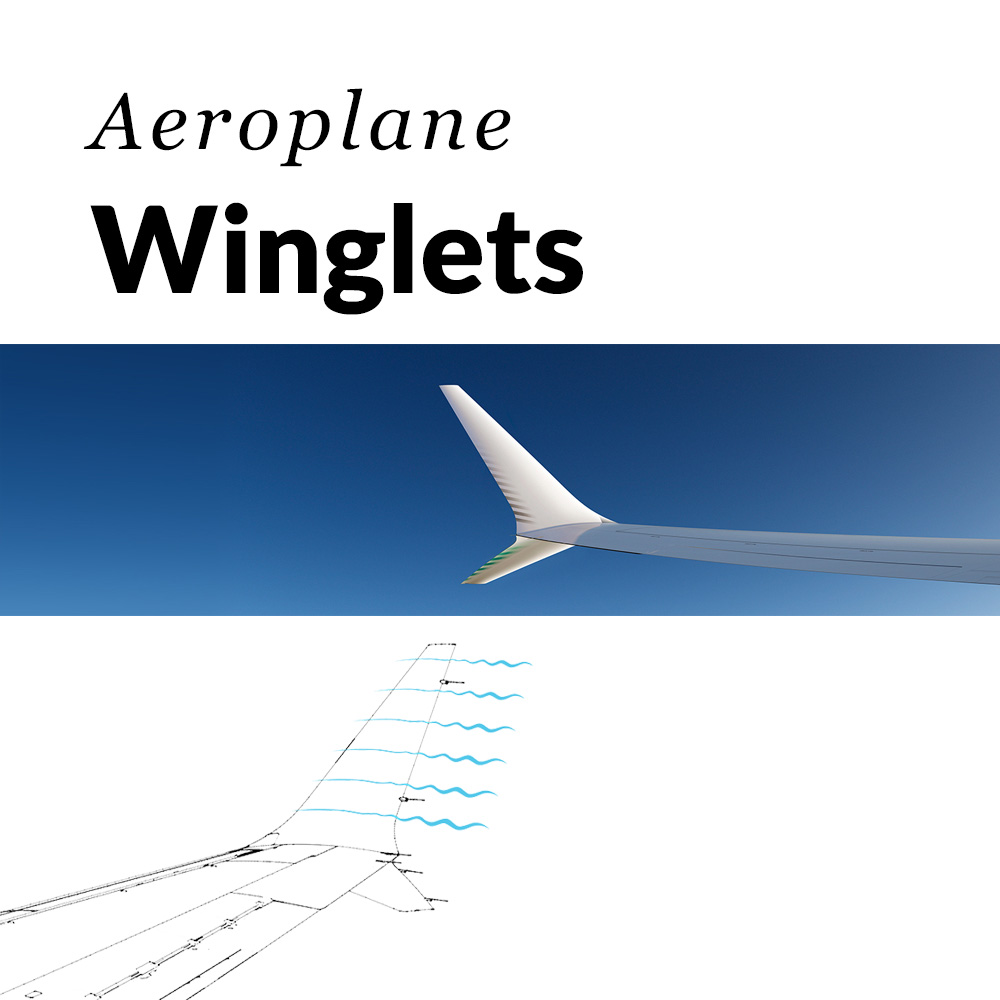
When a wing generates lift, it creates a pressure differential between its upper and lower surfaces. At the wing tip, high-pressure air spills around to the low-pressure side, creating a tip vortex — a swirling column of air that generates significant drag (called induced drag) and reduces efficiency.
Birds that soar for hours — eagles, vultures, storks — have evolved an elegant solution: their primary feathers splay upward and outward at the wing tips, acting like multiple small winglets that redirect and diffuse tip vortices. This reduces induced drag while maintaining the high-lift, low-speed performance needed for soaring.
Richard Whitcomb at NASA identified this principle in the 1970s and developed blended winglets for commercial aircraft. The Boeing 737-800 winglets reduce fuel consumption by 5-7%, saving approximately 200,000 litres per aircraft per year. Across the global commercial fleet, winglets save an estimated 2 billion litres of jet fuel annually — one of the highest-impact single engineering improvements in aviation history.
The Boeing 787 takes this further with raked wingtips that more closely mimic the gradual feather-spread geometry of soaring birds. Advanced "split scimitar winglets" and variable-geometry wingtips continue to improve on the original biomimetic principle.