The Problem
Energy storage and conversion rely heavily on platinum-group metals (platinum, cobalt, iridium), which are scarce, geopolitically concentrated, and environmentally destructive to mine. Alternative catalysts using abundant elements are needed to enable global energy transition.
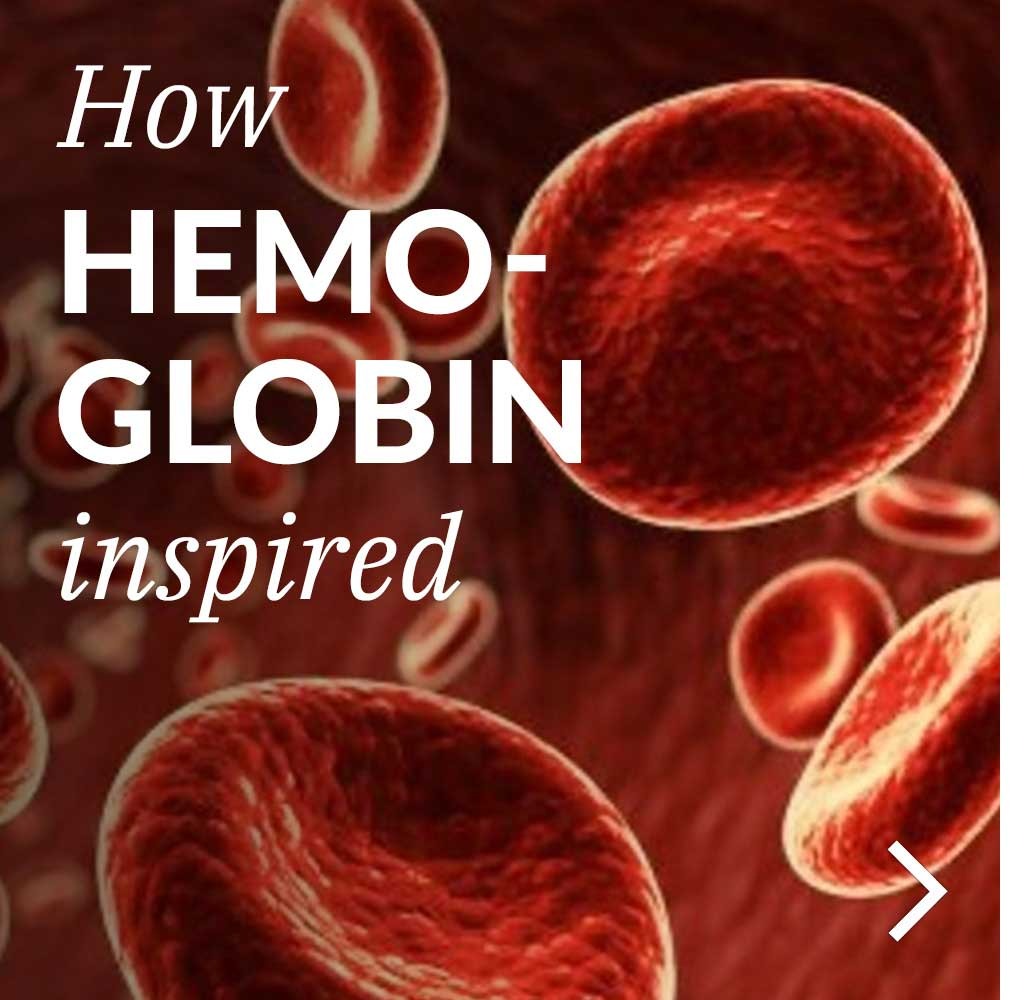
Hemoglobin's oxygen-binding mechanism inspires metal-free catalysts for energy storage, replacing rare-earth elements.
Hemoglobin reversibly binds oxygen through iron-porphyrin complexes, enabling efficient oxygen transport without catalytic degradation over billions of cycles. This biological system achieves catalytic selectivity and longevity through a precisely tuned coordination geometry—a feat that conventional catalysis, reliant on rare metals like platinum and cobalt, struggles to replicate sustainably. Azul Energy, working from Japan, identified that the key to hemoglobin's efficiency lies in its organic scaffold: the porphyrin ring system that positions iron for optimal binding whilst protecting it from deactivation. The company synthesised nitrogen-doped carbon structures mimicking porphyrin coordination chemistry, creating catalytically active sites without requiring rare metals. This breakthrough directly addresses energy storage bottlenecks: lithium-ion batteries and fuel cells depend on platinum-group metals, driving mining, geopolitical supply-chain vulnerability, and environmental destruction. Azul's hemoglobin-inspired catalysts demonstrate competitive oxygen reduction and hydrogen evolution reaction rates whilst using abundant iron and organic carbon. The innovation opens pathways to sustainable energy storage infrastructure accessible globally, not limited by metal scarcity.